
Automated Weld Hardness Testing According to ISO 9015
The IMPRESSIONS™ Weld Hardness Inspection Module is a specialized software tool developed for fully automated weld hardness testing according to ISO 9015.
This advanced application is specifically designed for hardness testing of welded joints, weld seams, and welded components, allowing users to perform precise and repeatable hardness measurements across the weld zone, heat-affected zone (HAZ), and base material.
By combining automated pattern setup, predefined ISO-compliant test positions, intelligent point correlation, and enhanced reporting, the system delivers fast, reliable, and fully standards-compliant weld hardness inspection for modern quality control laboratories.
This is an essential solution for manufacturers performing weld qualification, heat treatment verification, failure analysis, and production quality assurance.
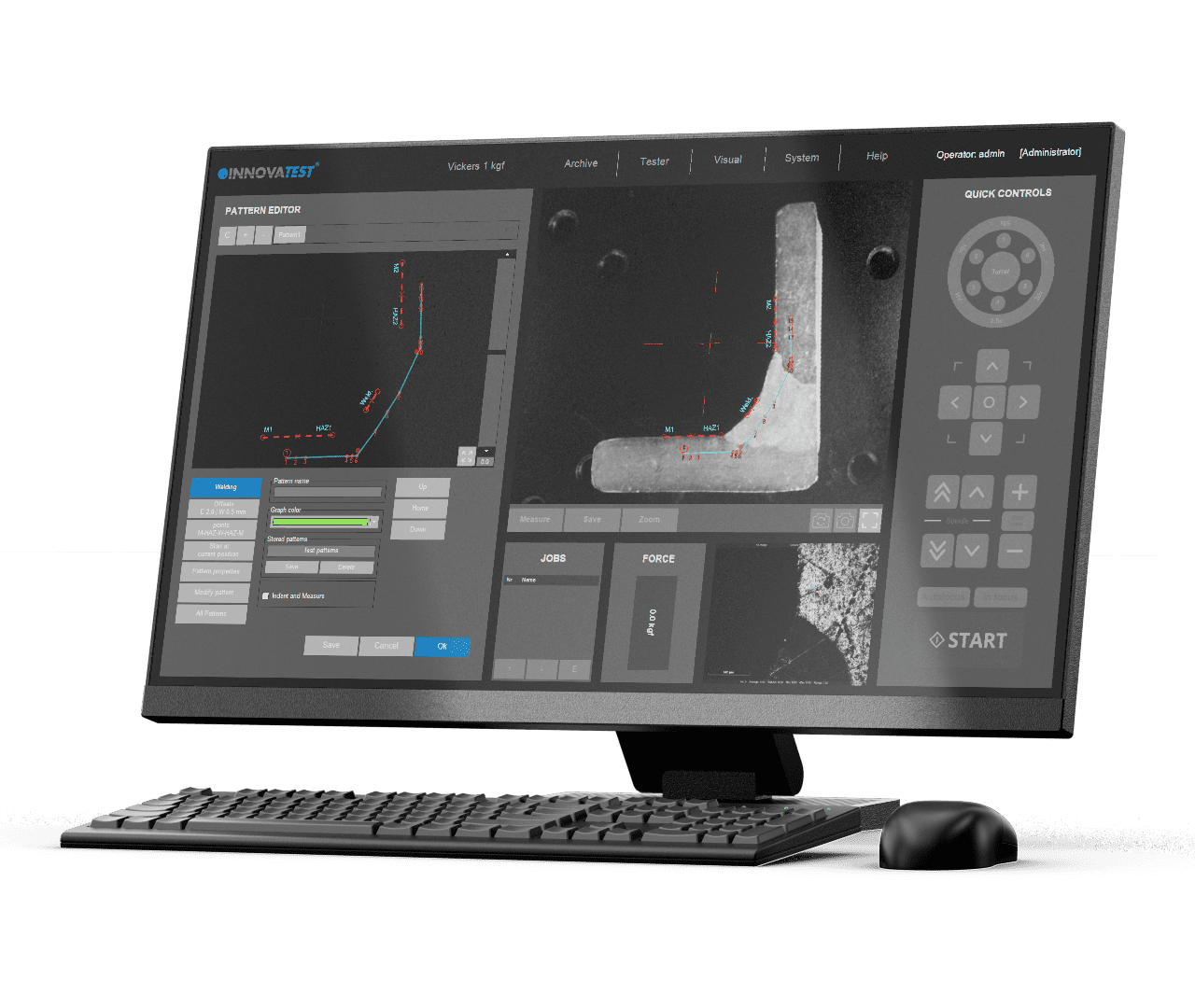
Automated Testing for Weld Zones, HAZ and Base Material
ISO 9015 requires hardness testing to be performed across multiple critical zones of a welded component to verify the mechanical integrity of the weld.
The IMPRESSIONS™ module simplifies this process by enabling:
This ensures accurate and consistent hardness profiling across the complete weld cross-section.
Standards-Compliant Testing According to ISO 9015
The software is fully configured to perform weld hardness testing according to ISO 9015, the international standard covering destructive tests on welds in metallic materials.
This includes:
Using predefined templates and automated workflows aligned with ISO 9015, the system reduces setup time and eliminates operator uncertainty.
This is especially valuable for laboratories performing frequent weld qualification and certification testing.
Automated Pattern Setup for Faster Weld Inspection
Manual weld hardness testing setup can be complex and time-consuming, especially when precise positioning is required across multiple weld zones.
The IMPRESSIONS™ Weld Hardness Module makes setup simple by using:
This allows operators to perform complex weld hardness traverses quickly and with high confidence.
The result is faster testing, stronger repeatability, and reduced operator dependency.
Embedded Calculations and Hardness Profile Evaluation
The software automatically manages the full weld hardness test sequence and provides clear evaluation of the hardness profile across the weld.
A typical weld hardness traverse compares values across multiple zones:
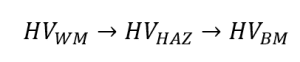
Where:
This allows fast identification of:
The system ensures consistent interpretation and repeatable results across all weld inspections.
Enhanced Reporting for ISO 9015 Compliance
The IMPRESSIONS™ Report Generator includes dedicated reporting templates specifically for weld hardness testing according to ISO 9015.
Reports can include:
This creates professional, audit-ready reports for certification, customer approval, and production quality assurance.
Applications of Automated Weld Hardness Testing
This module is essential for industries where weld integrity directly affects safety, compliance, and long-term performance.
Typical industries include:
Oil & Gas
Aerospace
Automotive
Heavy Industry
Energy Sector
In all these industries, accurate weld hardness testing is critical for preventing failure and ensuring compliance.
Automated vs Manual Weld Hardness Testing
Traditional manual weld hardness testing can be slow, difficult to position accurately, and highly dependent on operator skill.
IMPRESSIONS™ provides a far more efficient solution.
Manual Testing Limitations
IMPRESSIONS™ ISO 9015 Module Advantages
This transforms a complex weld qualification procedure into a fast, repeatable, and highly reliable automated workflow.
Precision Weld Quality Control for Modern Manufacturing
By combining automated test setup, embedded ISO standards, and advanced reporting tools, the IMPRESSIONS™ Weld Hardness Inspection Module provides a complete solution for weld quality assurance.
The result is faster inspections, stronger compliance, improved traceability, and greater confidence in every welded component—making it an essential tool for modern manufacturing, certification laboratories, and advanced production environments.